
We got tired of CAD chaos—so we built the tool we always wished existed
Before starting CADchat, Dan and Graham spent years deep in design and manufacturing. They worked on everything from 3D printing and injection molding to building industrial machines. Dan came from design operations and supply chain. Graham had previously led product teams and founded a 3D printing startup. Despite different roles and backgrounds, they kept running into the same issue: it’s nearly impossible to work on CAD together, clearly and efficiently.
When 20 People Join a Call and Still Leave Confused. Sharing CAD files didn’t solve the problem; it made it worse. More delays. More indecision.
“Ultimately, every single call was like one step forward, two steps back. And we’d get on the next call and it was like, ‘Well, I thought you were doing that.’ ‘No, I thought you did that.’”
Dan worked on a project where he gathered on late-night Zoom calls, screen-sharing CAD files, and trying to make decisions with 20 people at once. Calls went on for hours. No one could agree on what was said, who was doing what, or what came next. The product never made it to market.
Fixing 3D with 2D Tools? It Was Never Going to Work. Without the right tools, feedback turned into friction. Slow, unclear, and frustrating.
“Probably 30% of the time, there was confusion about what exact section of the 3D model we were talking about. And it’s not just because I was bad at my job — that was common across the whole team.”
Graham experienced the same pain early in his career. His job was to help designers fix their CAD models to improve print success rates. But he didn’t have the proper tools. He used Microsoft Snipping Tool and Paint to draw on screenshots. Still, it was nearly impossible to communicate clearly about what needed to change in the file.
Same Problems. Different Jobs.
For both of them, it was the same story on repeat:
- Hours lost on calls
- Conflicting feedback
- Endless slides and email threads
- And a sinking feeling that nobody was really on the same page
Everyone just accepted it as normal.
Just a few of the companies already using CADchat



What started over beers sparked something bigger, a smarter way to work in CAD.
Dan and Graham met through work during the height of the pandemic and quickly discovered a shared mindset. They both cared about moving things forward, not just talking about problems but building solutions. Over casual pandemic Zoom beers, they traded stories and realized how deeply this challenge ran in their own work and across the entire industry.
They weren’t the only ones dealing with this.
So they started building.
What began as a simple tool to mark up 3D models in real time grew into something much more: a shared workspace where teams could meet around the model and actually get things done.
How it’s going
CADchat officially launched with one clear goal: make it easier for people to meet around a 3D model and move work forward. Every feature we’ve added since then has been built to make that experience faster, clearer, and more useful.
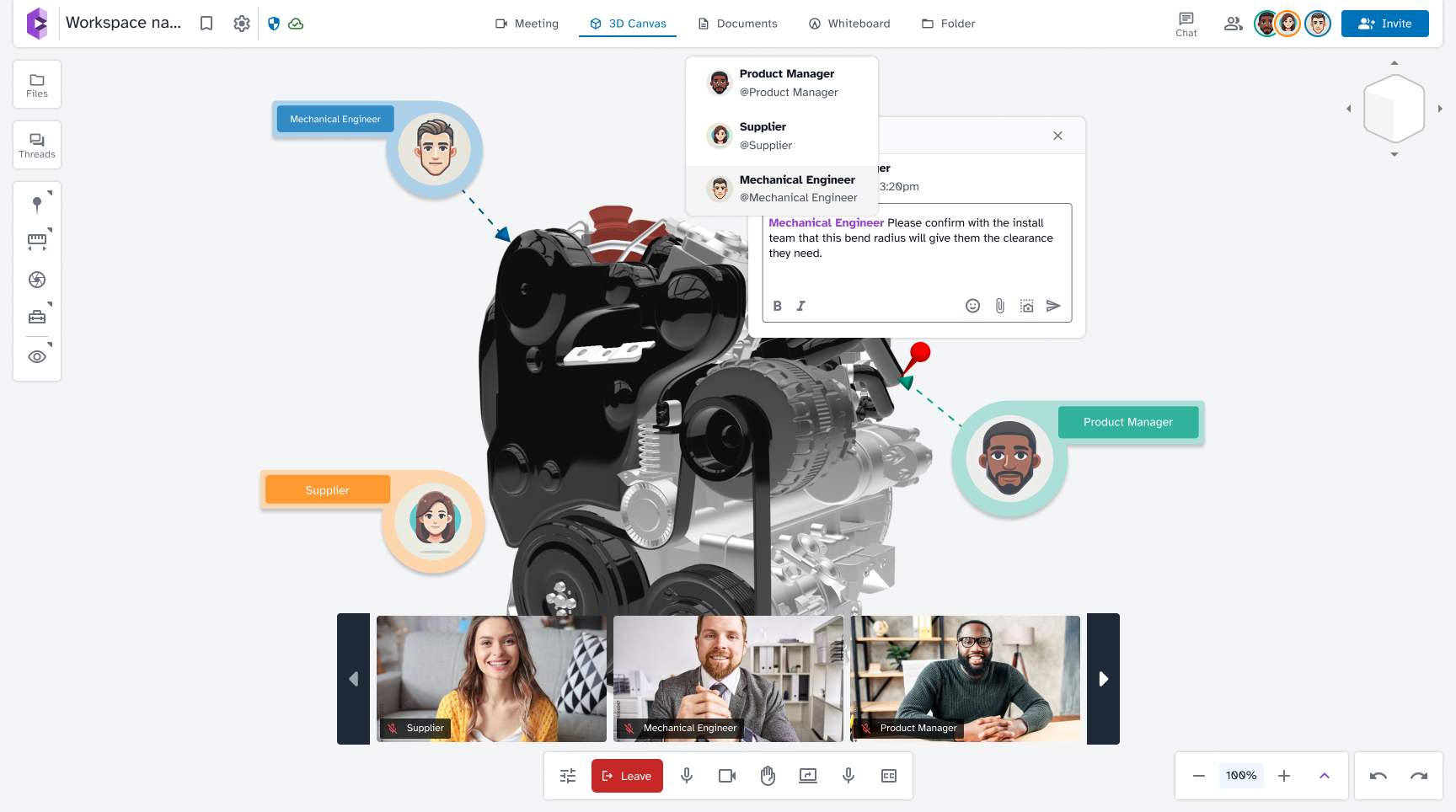
Video Conferencing
Our own built-in video for real design conversations. You see the model, you see each other, and you can get to work without juggling tools.
Meetings That Remember
When the meeting ends, the model stays where you left it. Pins, notes, decisions, it’s all still there. No more scrambling to remember what was said.
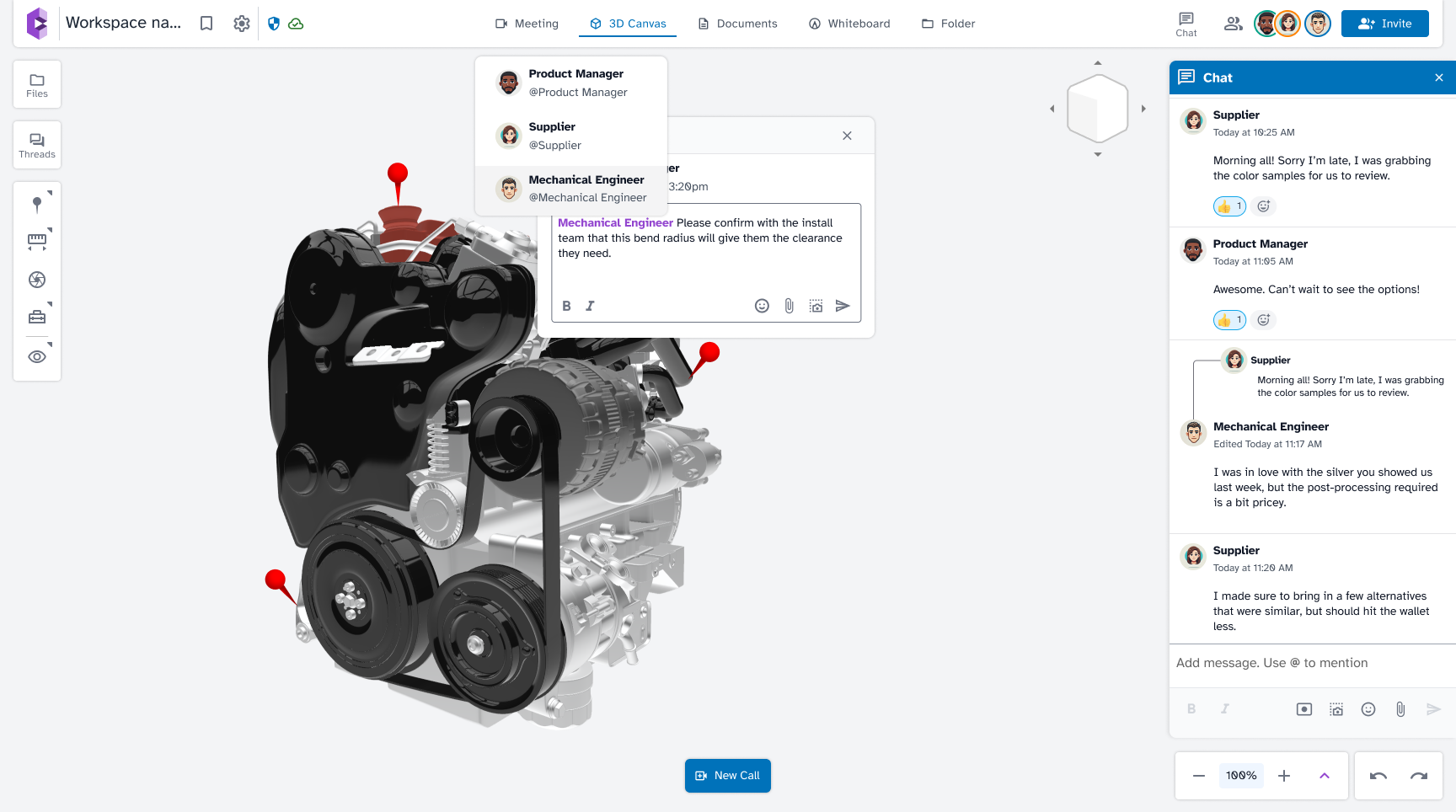
Real-Time Presence
Now you can see exactly what part of the model someone is referencing with live avatars and cursors. No guessing. No confusion. Just clarity.
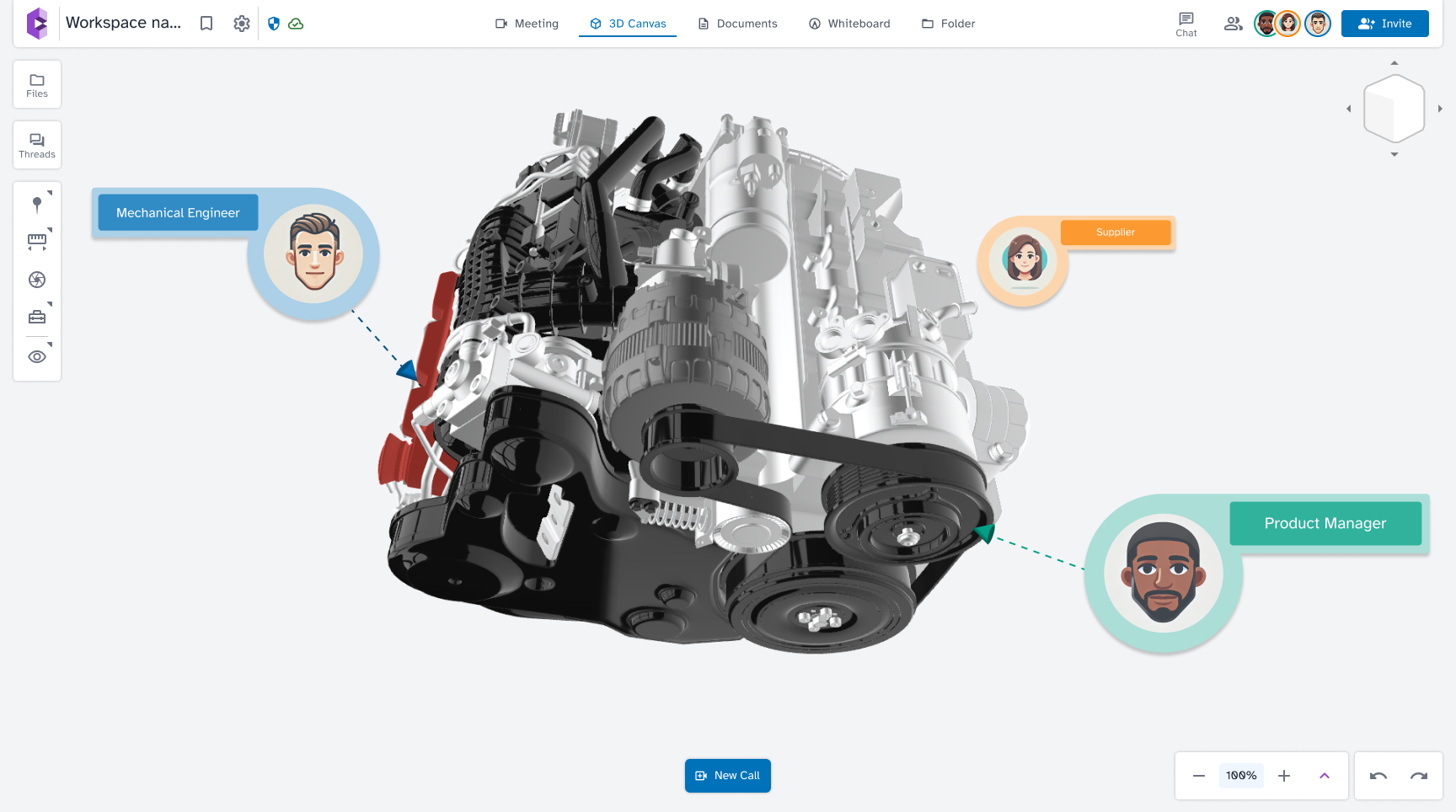
Each feature we’ve shipped came straight from the kind of pain we’d experienced ourselves.
And we’re not done yet.
What we believe
We built CADchat because we were tired of wasting time, missing details, and watching good ideas fall apart. If you’ve ever sat through a 3-hour call trying to explain a design or emailed countless screenshots of CAD files back and forth, you’ll understand why this matters.
We set out to fix a problem. CADchat is how we’re doing it.
- The real issue isn’t the designs. It’s people not being able to see what each other means.
- The current way of working slows everyone down — and it doesn’t have to.
- Working on a 3D model with others should feel like standing next to them.